
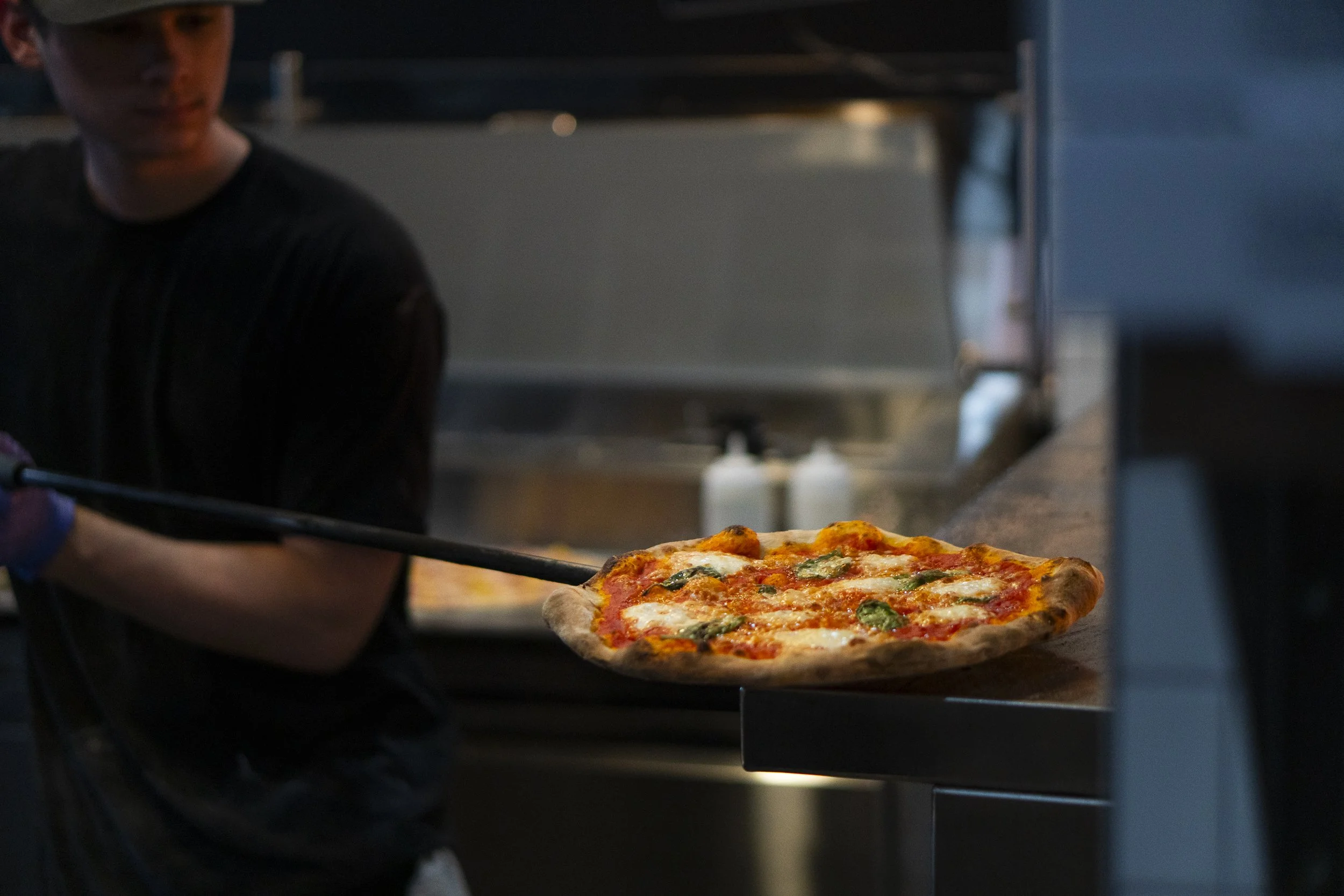
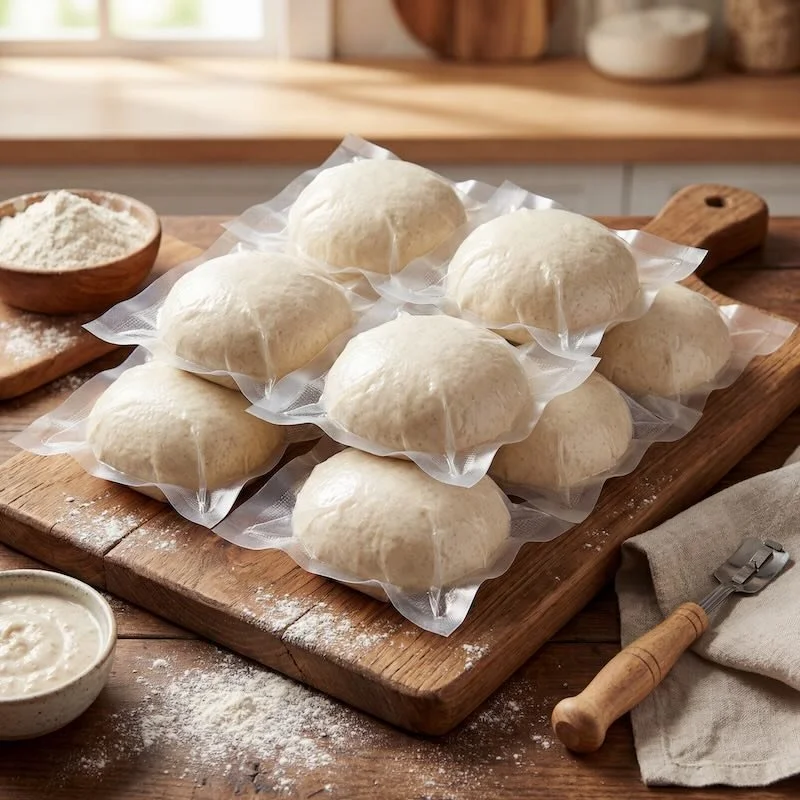
Sourdough Pizza Dough — 10-Pack (Best Value)
Stock up with our best-selling 10-pack of handmade sourdough pizza dough, made fresh in our Forest, Virginia pizzeria using traditional long fermentation. Delivered frozen, ready to thaw, stretch, and bake.
What’s Included
10 oz each
Makes ten 12-inch pizzas
Handmade & fermented using natural sourdough
Flash-frozen for peak freshness
Perfect for families, meal prep, or parties
Price: $99.99

Shipping Details
Shipping fees are calculated based on your location:
FREE Shipping east of the Mississippi River
$20 Flat Rate west of the Mississippi
Orders ship frozen with insulated packaging.
Click Here for more details.
How to Use the Dough
Thaw in the refrigerator overnight.
Bring to room temp 60–90 minutes before stretching.
Bake on a stone/steel at 500–550°F.
Click here for more instructions.
Troubleshooting Sourdough Pizza Dough (Common Problems Solved)
-
Cause: Under‑fermented or too cold.
Fix: Warm to room temp, rest an additional 10–20 minutes, and stretch gently -
Cause: Gluten is too tight.
Fix: Let it relax on the counter; avoid over‑handling; increase final fermentation time next batch. -
Cause: Insufficient heat or cool baking surface.
Fix: Preheat stone or steel for at least 45 minutes; move rack closer to heating element. -
Cause: Over‑fermented or long warm proof.
Fix: Shorten bulk fermentation or increase cold fermentation. -
Cause: Too much moisture or slow launching.
Fix: Use a thin layer of flour/semolina; build the pizza right before launch; keep movements quick and confident.
How to Handle Sourdough Pizza Dough Like a Pizzaiolo
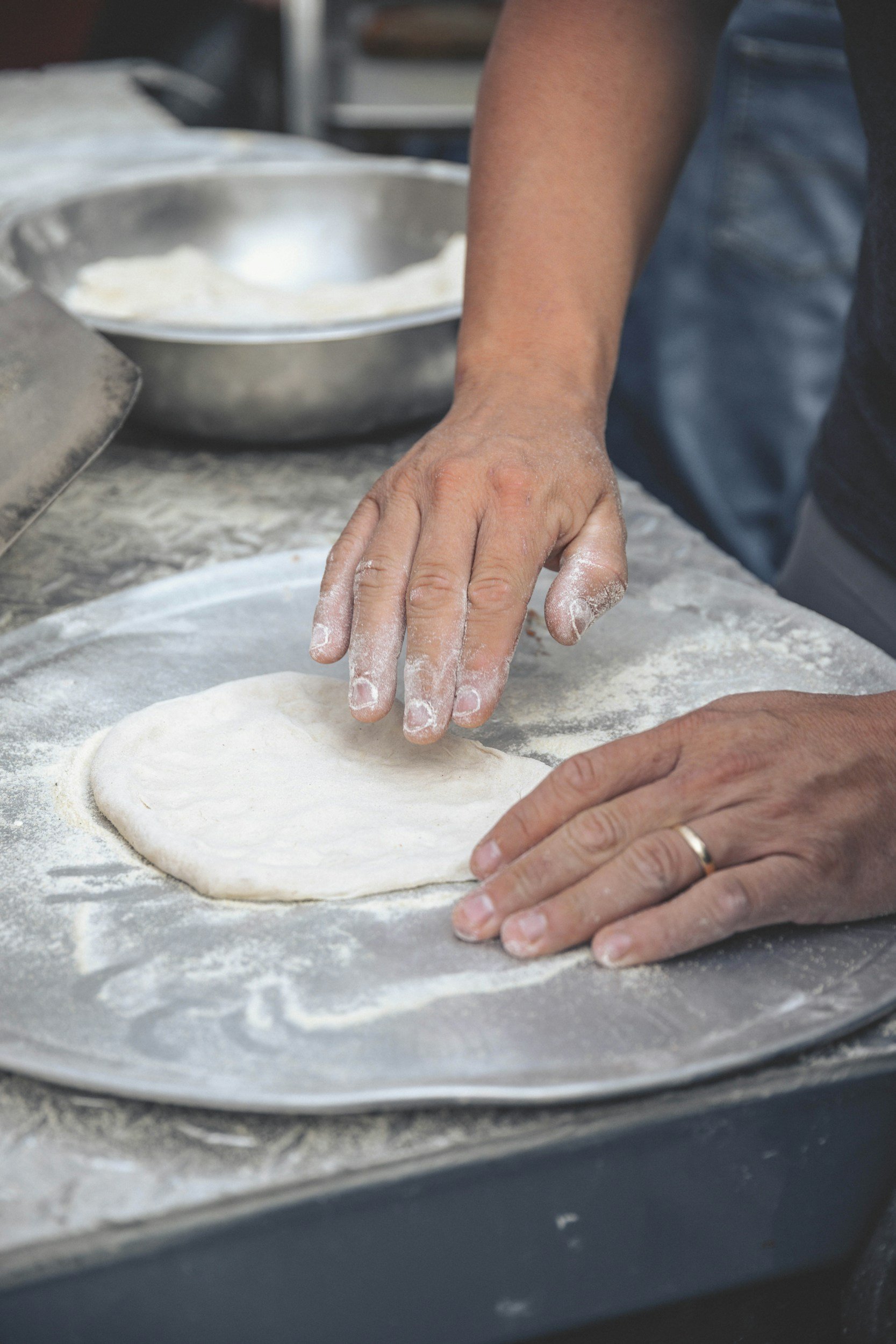
Handling sourdough pizza dough properly is the secret to beautiful results. Good dough should feel soft, relaxed, and slightly tacky—not tight or dense.
How to Know Your Dough Is Ready
Your dough is ready to stretch when it:
feels airy and light,
gently domes when risen,
stretches without shrinking back,
shows tiny bubbles beneath the surface.
If the Dough Fights Back
If it shrinks or tears, it’s too cold or under‑relaxed.
Simply let it rest 15 minutes and try again.
The Right Way to Stretch
Avoid rolling pins—they crush fermentation bubbles. Instead:
Press FROM the center outward while leaving a ½‑inch rim.
Lift onto your knuckles and use gravity instead of force.
Rotate slowly, letting the dough open itself.
Keep movements gentle to preserve the airy edge.
Preventing Sticking
Dust lightly with flour or semolina—too much flour scorches in the oven.
Verified Reviews
-
“Love it!!! Will definitely purchase again.”
Shannon Taylor — ⭐⭐⭐⭐⭐
-
“Excellent quality, packaging, service.”
Greg Laka — ⭐⭐⭐⭐⭐
-
“Fantastic! Fast shipping and the dough is great baked right after receipt or after freezing! Very happy repeat customer!”
Geoff Herbst — ⭐⭐⭐⭐⭐
What Makes a Great Sourdough Pizza Dough?
When most people think of sourdough, they picture artisan bread with a deep tang and chewy interior. But sourdough pizza dough is its own craft—one built around balance. A great sourdough pizza dough strikes the perfect harmony between structure and softness, strength and extensibility, flavor and performance under high heat.
Structure & Strength
A well‑developed dough needs enough gluten strength to hold its shape when stretched. This internal structure is what allows the dough to puff dramatically along the edges, creating that airy, blistered cornicione.
Relaxed Extensibility
Unlike bread dough, which needs to stand tall, pizza dough should stretch willingly. A properly fermented sourdough pizza dough opens easily into a 10–12 inch round with minimal resistance. That elasticity comes from the natural acids and long fermentation that soften and relax gluten over time.
Full Flavor Development
Great sourdough pizza dough has a fragrance that hints at fermentation—subtle tang, mild sweetness, and deep, wheaty aroma. Natural acids and fermentation byproducts create a flavor complexity that commercial yeast simply can’t achieve.
Heat Performance
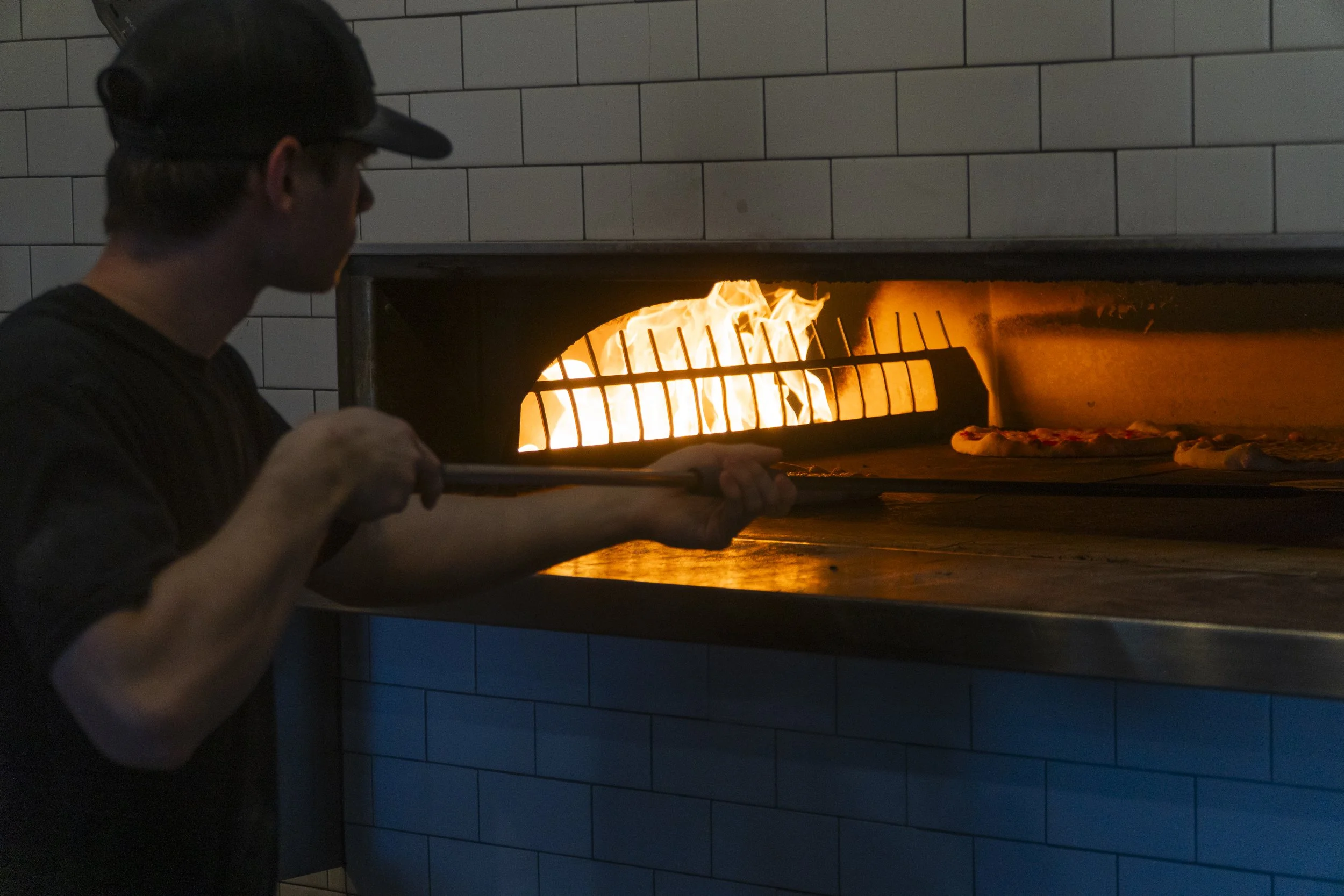
The perfect dough should withstand high temperatures, brown beautifully, and blister naturally. Whether you—
bake on a home oven steel at 500°F,
or fire a pizza in a 900°F outdoor oven,
a great sourdough dough responds with crisp edges, airy bubbles, and a tender interior that stays soft without becoming gummy.
The Flavor Profile of True Sourdough Pizza Dough
Sourdough pizza dough delivers a flavor profile commercial yeast can’t replicate. Long, slow fermentation creates a perfect balance of tang, aroma, and depth.
Complex, Layered Tanginess
Not sharp or acidic—true sourdough pizza dough has a mild tang paired with natural sweetness from the flour.
Caramelization & Browning
The fermentation byproducts encourage:
deep golden coloration,
natural blistering,
subtle roasted notes.
Aroma & Texture
Before baking, the dough smells faintly sweet and grassy.
After baking, expect:
crisp, blistered edges,
soft, pillowy interior,
a clean, digestible finish.
Perfect Pairings
This dough shines with toppings that appreciate contrast—fresh mozzarella, basil, tomato, olive oil, and savory meats all balance beautifully with the depth of sourdough.