
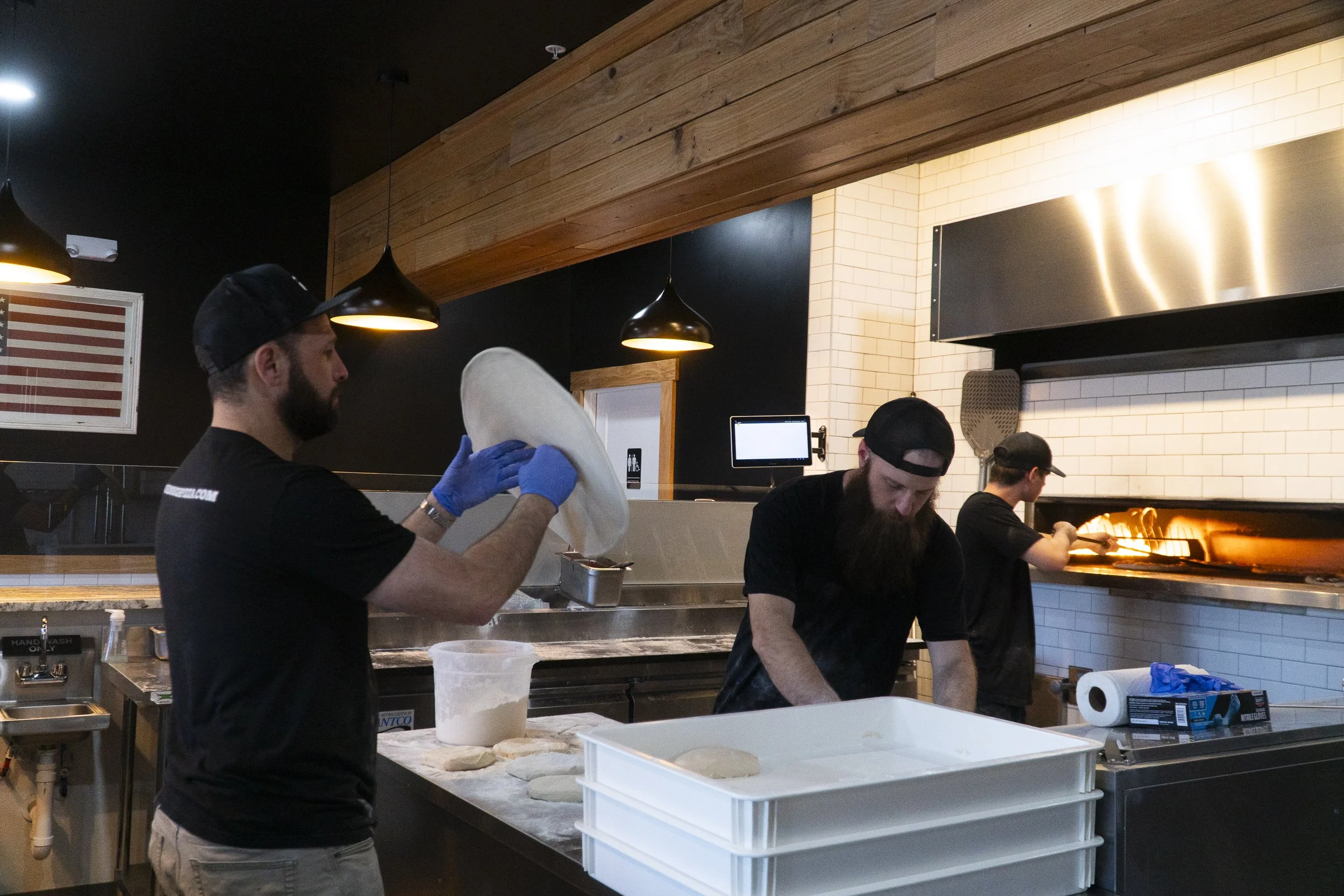
Sourdough Pizza Dough — Handcrafted & Shipped Nationwide
Great pizza starts with great dough. At Sourdough Pizza Company, we handcraft every dough ball using a traditional, slow‑fermented sourdough process that creates exceptional flavor, texture, and digestibility. Made daily in our real pizzeria and frozen at peak fermentation, our dough ships nationwide so you can bake restaurant‑quality sourdough pizza at home.
What Makes a Great Sourdough Pizza Dough?
A great sourdough pizza dough isn’t defined by sourness alone. It’s defined by balance—the balance between strength and softness, flavor and performance, structure and extensibility.
Unlike bread dough, pizza dough must stretch thin without tearing, bake quickly without drying out, and develop a crisp exterior while remaining light and airy inside. Achieving this requires careful control of fermentation, hydration, and dough handling.
A high‑quality sourdough pizza dough should:
Stretch easily into a thin center without snapping back
Hold air in the rim to create a puffy, blistered crust
Brown naturally without added sugars
Deliver subtle tang and deep flavor without overpowering toppings
When fermentation is dialed in, the dough becomes more than a base—it becomes part of the flavor of the pizza itself.
What Makes Sourdough Pizza Dough Different?
Most pizza dough is made with commercial yeast and quick fermentation.
Sourdough pizza dough is different — and better.
✔ Naturally leavened
Wild yeast and beneficial bacteria create deeper flavor and better browning.
✔ Slow‑fermented for 24–72 hours
Time builds structure, digestibility, and texture no “quick dough” can match.
✔ More extensible, less sticky, easier to stretch
A well‑fermented sourdough dough ball practically stretches itself.
✔ Crispy, blistered crust with soft, airy crumb
The hallmark of true artisan pizza.
✔ Excellent digestibility
Many people find sourdough pizza easier on the stomach than yeasted dough.
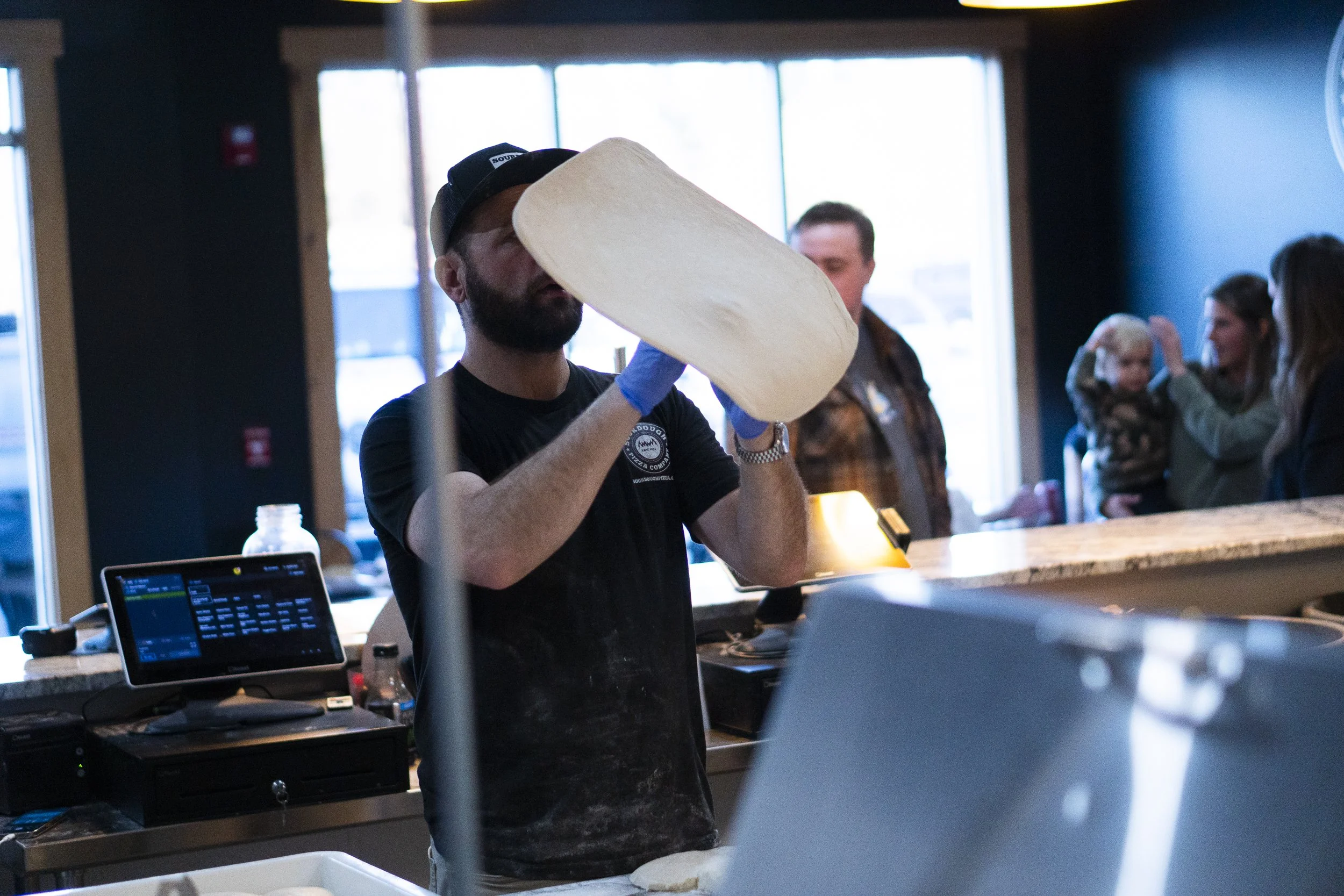
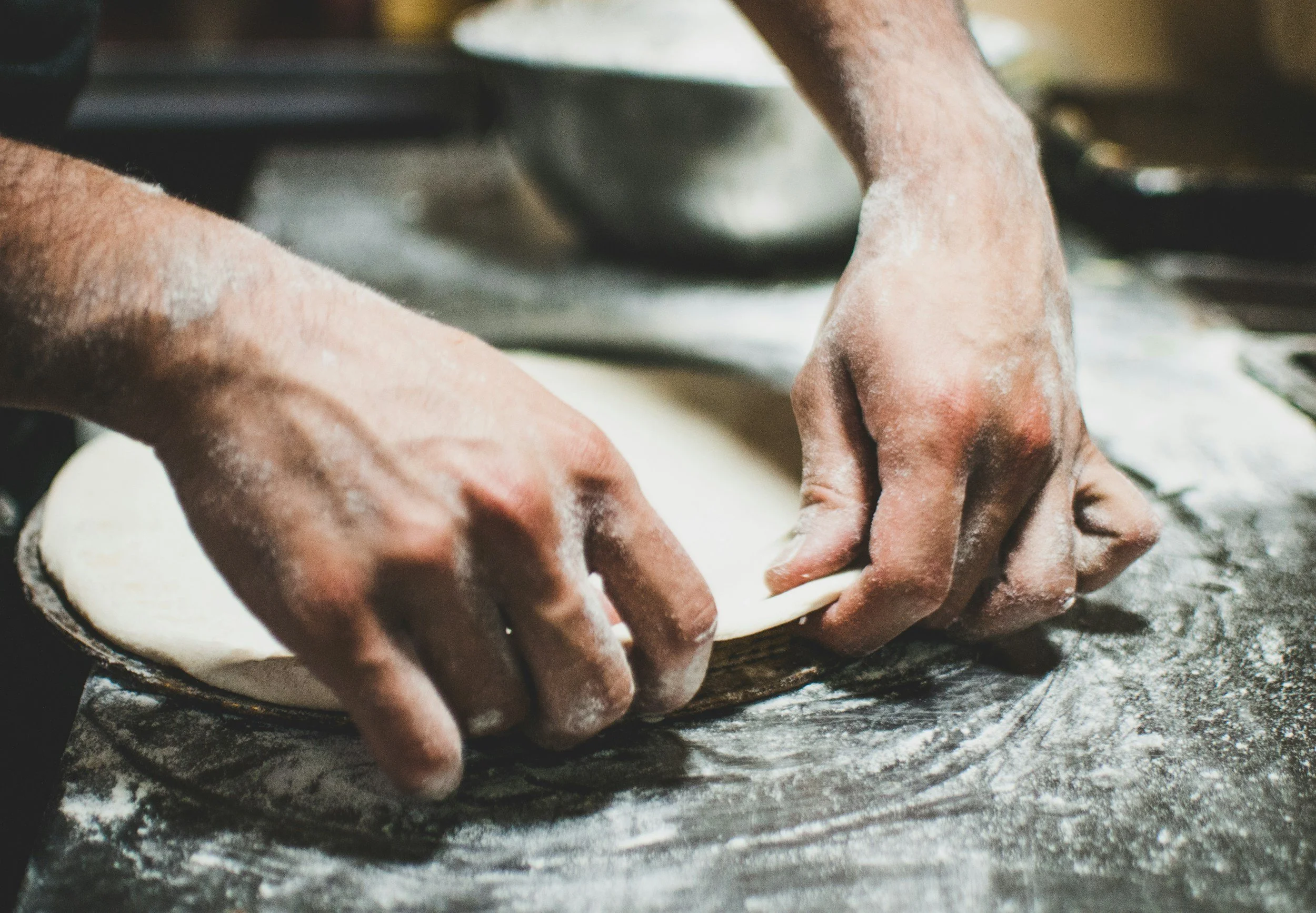
The Science Behind Our Fermentation Process
Sourdough dough isn’t just “regular dough with sourdough flavor.” It behaves differently because the fermentation process is completely different.
Natural Yeast + Organic Acids = Better Dough
Our natural starter contains:
Lactobacillus (lactic acid bacteria)
Wild yeast
Organic acids
Fermentation byproducts that improve flavor and structure
These microorganisms:
Strengthen gluten
Improve elasticity
Add tang and complexity
Enhance oven spring
Create more consistent browning
This is why sourdough pizza dough gets that signature “leopard spotting.”
Hydration: Why Our Dough Feels Soft, Smooth & Stretchable
Hydration affects:
Stretchability
Tearing resistance
Crumb openness
Crispiness
Fermentation activity
Our dough is produced at a higher hydration than typical store‑bought doughs. The Result?
Softer dough
Gentler handling
Bigger crust bubbles
Light, airy interior
Crispy bottom texture
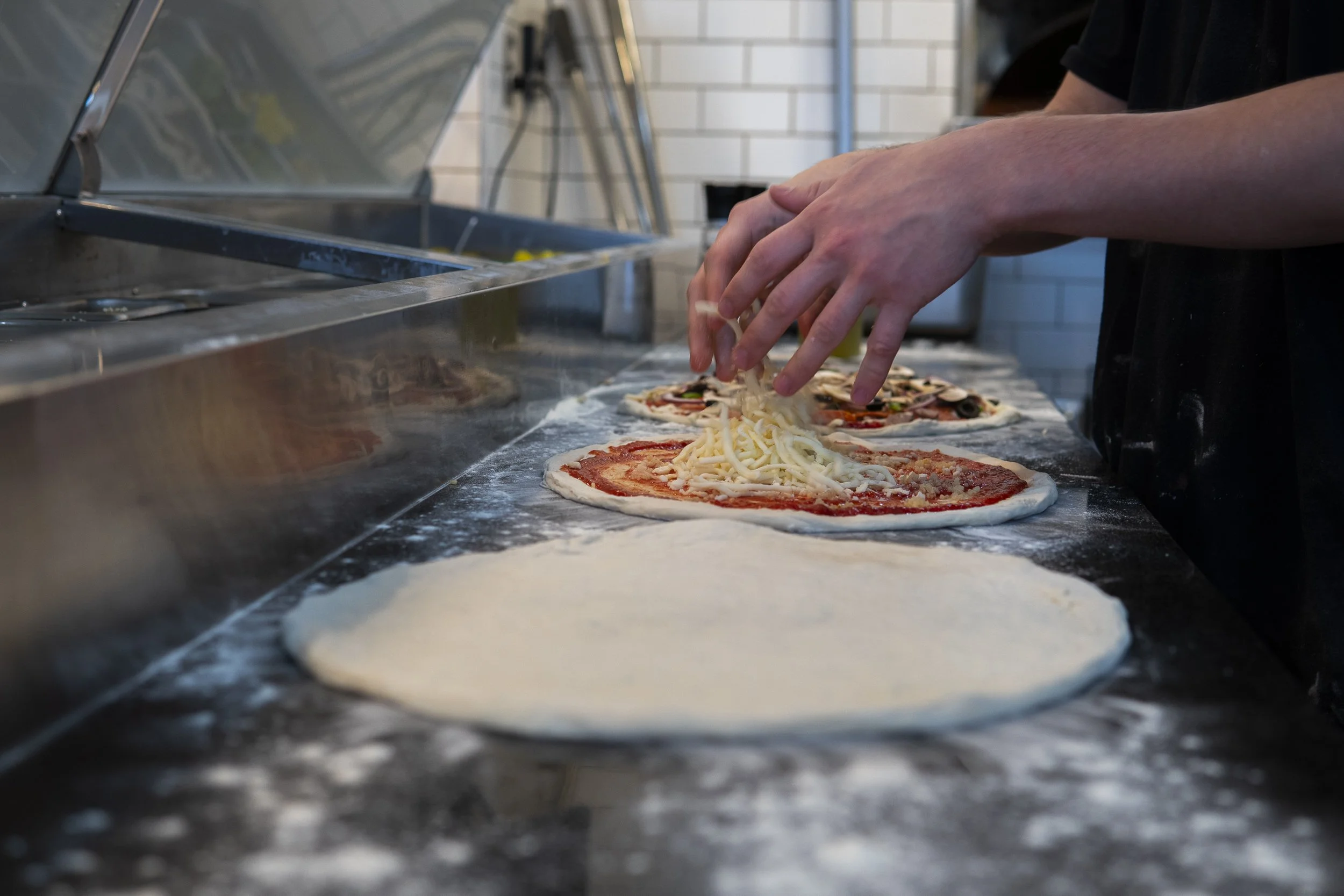
Sourdough Pizza Dough vs. Sourdough Bread Dough
Pizza sourdough is engineered for stretching, high‑heat baking, and a blistered crust—very different from loaf bread.
| Feature | Pizza Sourdough Made for Pizza | Bread Sourdough Made for Loaves |
|---|---|---|
| Primary Purpose | Stretches easily into a thin, airy base; optimized for toppings and fast bake. | Built for height and internal crumb structure in free‑standing or pan loaves. |
| Hydration Level | Moderate (≈60–70%) to balance extensibility and handling, especially for hot ovens. | Often higher (≈70–85%) to encourage open crumb and gelatinized interior. |
| Gluten Development | Enough strength to stretch without tearing while staying relaxed and extensible. | Stronger network to support vertical rise and long proofing without collapse. |
| Fermentation Focus | Flavor + extensibility; timing tuned for easy opening and balanced browning. | Flavor + structure; longer cold retard can increase tang and strength. |
| Texture When Baked | Crisp underside, blistered edge (“leopard” spotting), soft, airy crumb. | Thicker crust, chewy interior, more uniform cell structure. |
| Shaping | Hand‑stretched; avoid degassing the rim to keep an airy cornicione. | Pre‑shape and final shape (boule/bâtard/pan) to maximize lift. |
| Handling Feel | Supple, relaxed, slightly tacky; opens easily to 10–12" or more. | More structured and resilient; holds tension for scoring and oven spring. |
| Baking Temperature | Very hot (500–900°F) for fast bake and dramatic oven spring. | Moderate (425–500°F) for even bake and thorough crumb set. |
Pizza Sourdough Made for Pizza
- Primary Purpose
- Stretches easily into a thin, airy base; optimized for toppings and fast bake.
- Hydration Level
- Moderate (≈60–70%) to balance extensibility and handling.
- Gluten Development
- Strong enough to stretch without tearing while staying relaxed.
- Fermentation Focus
- Flavor + extensibility; timing tuned for easy opening and browning.
- Texture When Baked
- Crisp underside, blistered edge, soft, airy crumb.
- Shaping
- Hand‑stretched; preserve rim gas for an airy cornicione.
- Handling Feel
- Supple, relaxed, slightly tacky; opens to 10–12"+.
- Baking Temperature
- Very hot (500–900°F) for a fast, high‑spring bake.
Bread Sourdough Made for Loaves
- Primary Purpose
- Built for height and internal crumb structure in loaves.
- Hydration Level
- Often higher (≈70–85%) to promote open crumb.
- Gluten Development
- Stronger network to support vertical rise and long proofs.
- Fermentation Focus
- Flavor + structure; cold retard often increases tang.
- Texture When Baked
- Thicker crust, chewy interior, more uniform cells.
- Shaping
- Pre‑shape/final shape (boule/bâtard/pan) to maximize lift.
- Handling Feel
- More structured and resilient; holds tension for scoring.
- Baking Temperature
- Moderate (425–500°F) for an even, thorough bake.
🍕 HOW TO USE THE DOUGH
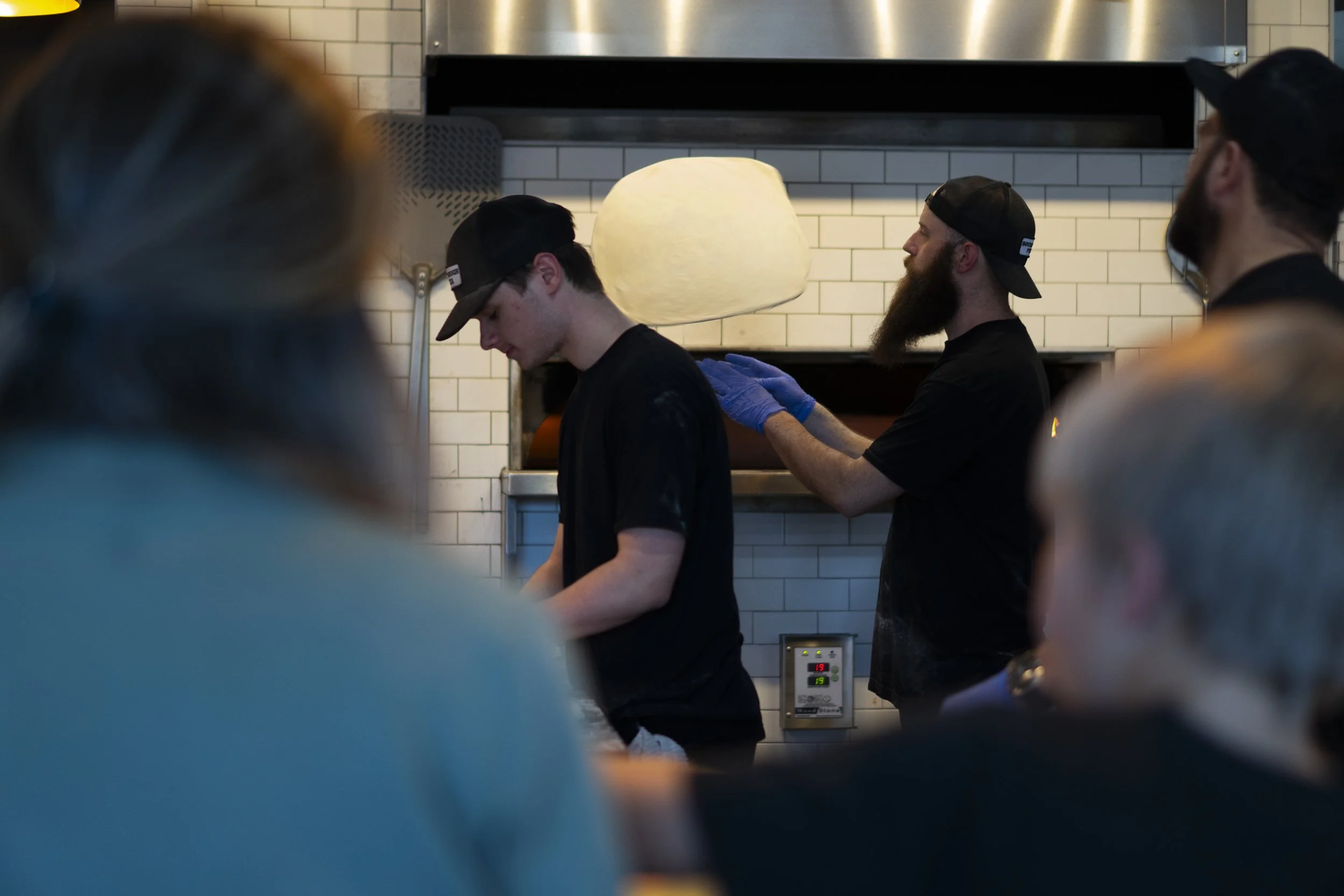
Your step‑by‑step guide for perfect sourdough pizza at home.
❄️ 1. Keep Frozen
Your dough arrives frozen to lock in freshness. Store it in the freezer until you’re ready to make pizza.
🧊 2. Thaw in the Fridge (24 Hours)
Place the dough ball in the refrigerator the day before baking. Slow thawing protects the fermentation and improves texture.
⏱ 3. Bring to Room Temp (1–2 Hours)
Let the dough warm up on the counter, covered, until it’s soft, relaxed, and easy to stretch.
🤲 4. Stretch Gently — Don’t Roll
Flour your hands and surface lightly, then stretch from the center outward to keep the airy sourdough bubbles intact.
🔥 5. Bake on High Heat
Use the highest heat your oven can reach. High temperatures create better oven spring, more bubbles, and a crisp bottom.
🍕 6. Enjoy Your Pizza!
Top it simply, bake fast, and enjoy artisan pizza at home in minutes.
How to Handle Sourdough Pizza Dough Like a Pizzaiolo

Proper handling is just as important as fermentation. Well‑made sourdough pizza dough should feel soft, relaxed, and alive.
When the Dough Is Ready
Your dough is ready to stretch when it:
Feels light and airy
Springs back slowly when pressed
Opens easily without tearing
Cold dough is tight and resistant. Always allow sourdough pizza dough to temper at room temperature before stretching.
Stretching Technique
Never use a rolling pin—it removes the gas created during fermentation.
Press gently from the center outward, leaving a rim.
Lift onto your knuckles and let gravity help stretch the dough.
Rotate slowly and stop as soon as the dough reaches size.
Minimal handling preserves the airy edge that defines great sourdough pizza.
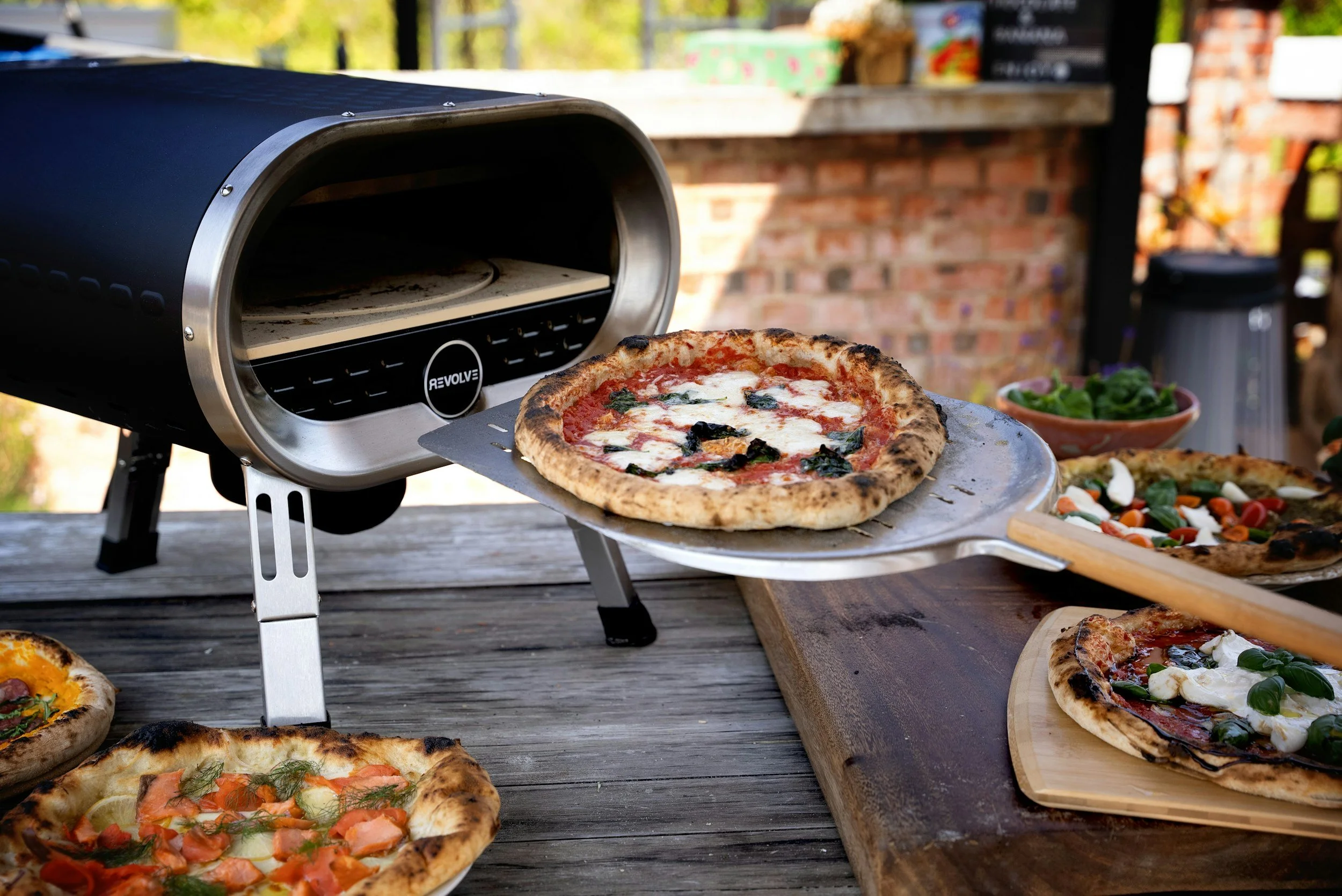
Baking Sourdough Pizza Dough (Home Oven vs Outdoor Oven)
Sourdough pizza dough performs beautifully across a range of ovens when baked hot and fast.
Home Oven (475–550°F)
Preheat a pizza stone or steel for at least 45 minutes
Bake on the lowest rack for strong bottom heat
Expect bake times of 5–8 minutes
Pizza Steel vs Stone
Steel delivers stronger bottom browning and faster oven spring
Stone offers gentler heat and more forgiving bakes
Outdoor Ovens (750–900°F)
Bake times drop to 60–120 seconds
Rotate frequently to avoid scorching
High heat encourages blistering and dramatic rise
Regardless of oven type, sourdough pizza dough benefits from intense initial heat that rapidly expands trapped gases in the rim.
Troubleshooting Sourdough Pizza Dough (Common Problems Solved)
Even great dough can behave unpredictably. Here’s how to fix the most common issues.
Dough Tears While Stretching
Likely under‑fermented or too cold
Let it rest longer at room temperature
Dough Shrinks Back
Gluten is too tight
Allow more relaxation time and avoid over‑handling
Pale Bottom Crust
Baking surface isn’t hot enough
Extend preheat time or move rack lower
Overly Sour Flavor
Dough fermented too long at warm temperatures
Shorten room‑temp fermentation or rely more on cold fermentation
Sticky Dough
Use minimal bench flour or semolina
Excess flour burns and adds bitterness
Understanding dough behavior is part of mastering sourdough pizza.
The Flavor Profile of True Sourdough Pizza Dough
True sourdough pizza dough offers a flavor depth that commercial yeast dough simply can’t match.
Long fermentation develops organic acids that contribute subtle tang, mild sweetness, and savory complexity. During baking, these compounds promote natural caramelization, creating golden color and blistered texture without added sugar.
The finished crust should be:
Light and crisp on the outside
Soft and airy inside
Balanced in flavor, not aggressively sour
This complexity pairs especially well with simple toppings—tomato, fresh mozzarella, olive oil, and basil—where the dough itself becomes part of the experience.
📦 Shipping Information (Quick Overview)
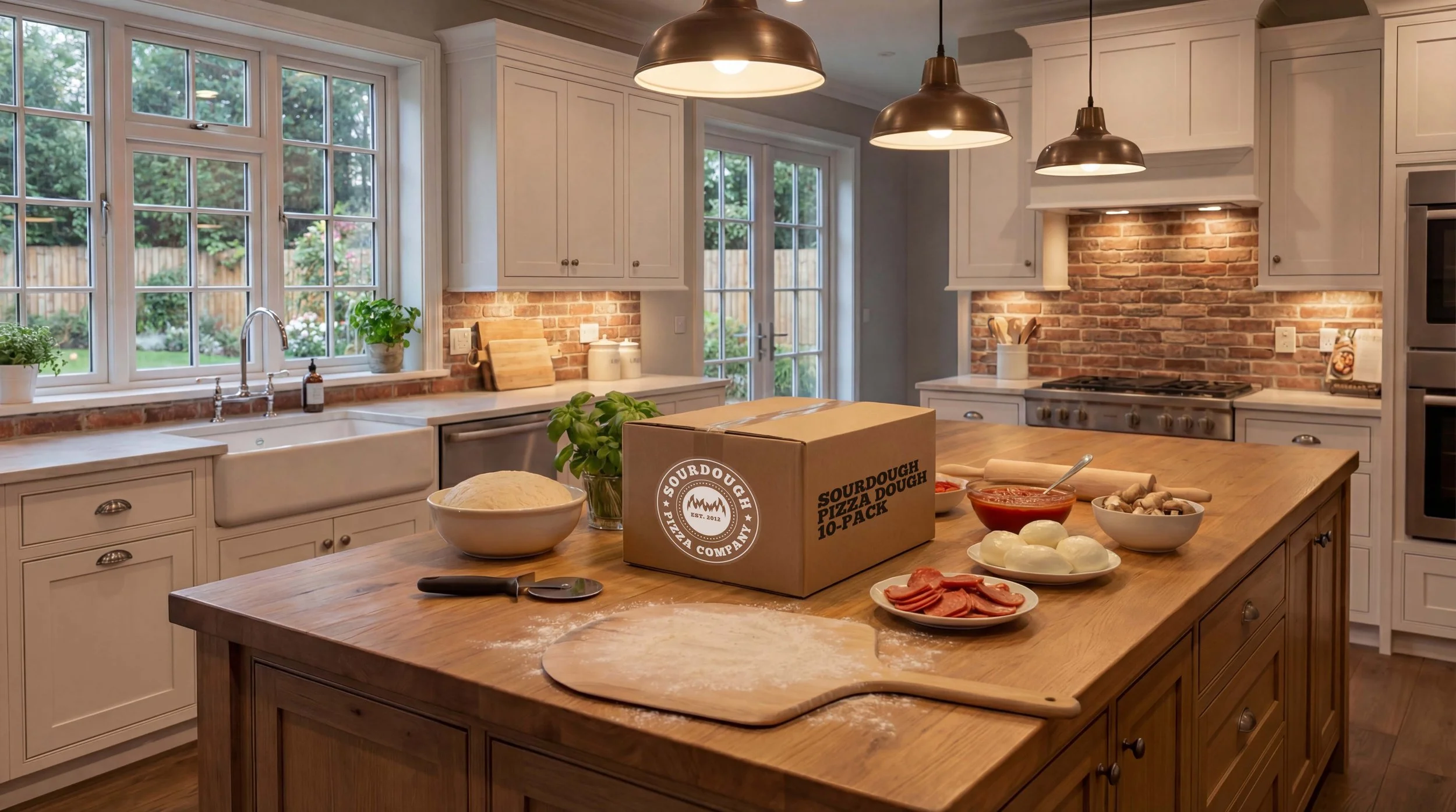
Free Shipping East of the Mississippi
Fast, affordable delivery to most of the eastern U.S.
$20 Flat Rate West of the Mississippi
One simple rate — no surprises.
Ships Mondays & Tuesdays
We ship at the start of the week to ensure your dough arrives frozen and fresh.
Frequently Asked Questions
-
Sourdough pizza dough is made using a natural sourdough starter instead of commercial yeast. Fermentation happens slowly, developing flavor, improving extensibility, and creating a light, airy crust with natural browning.
-
No. While they share ingredients, sourdough pizza dough is designed to stretch thin and bake quickly at high heat. Bread dough is built for strength and vertical rise, which makes it unsuitable for pizza without adjustments.
-
Most sourdough pizza dough benefits from long fermentation—often 24 to 72 hours. Extended fermentation improves flavor, relaxes gluten, and makes the dough easier to stretch.
-
Natural fermentation produces organic acids that relax gluten over time. This creates a dough that opens smoothly without snapping back, allowing for thin centers and airy edges.
-
Moderate hydration (around 60–65%) offers the best balance of handling and texture. Higher hydration produces a lighter, more open crust but requires more experience to manage.
-
Yes. Sourdough pizza dough performs well in home ovens when baked hot on a preheated stone or steel. High initial heat helps the crust rise quickly and brown evenly.
-
Natural fermentation breaks down starches into sugars that caramelize during baking. This leads to deep color and blistering without the need for added sweeteners.
-
Well‑fermented sourdough pizza dough should have balanced flavor—not sharp sourness. The goal is subtle tang, mild sweetness, and savory depth that complements toppings.
🤝 Made by a Real Pizzeria
Our dough is handcrafted daily in our pizzeria in Forest, Virginia — the same dough we serve to our local community. With 700+ 4.9★ Google reviews, you’re getting pizza dough trusted and loved by real customers.
Ready to Bake?
Get our handmade sourdough pizza dough delivered straight to your door — fresh‑frozen, artisan‑crafted, and easy to bake at home.